
Contents
- ⚔️ The Battle of Agincourt: A Defining Moment
- 📍 The Battlefield: Azincourt, France
- 📅 When and Why It Happened
- 👑 The Key Players: Henry V vs. Charles d'Albret
- 🏹 The Longbow's Dominance
- 📉 The Devastating Toll
- 🏆 Legacy and Cultural Impact
- 🤔 Historical Debates and Controversies
- 🗺️ Visiting the Agincourt Battlefield Today
- 📚 Further Reading and Resources
- Frequently Asked Questions
- Related Topics
Overview
The Battle of Agincourt, fought on October 25, 1415, wasn't just another clash in the Hundred Years' War; it was a brutal, mud-soaked testament to the devastating power of the English longbow against French chivalry. Despite being outnumbered, Henry V's forces, exhausted and disease-ridden, annihilated a much larger French army, securing a victory that echoed through military history. The battle's legacy is a potent mix of tactical brilliance, sheer grit, and the stark reality of how new military technology could shatter old hierarchies. It's a story that continues to captivate historians, reenactors, and anyone fascinated by the raw, often brutal, turning points of human conflict.
⚔️ The Battle of Agincourt: A Defining Moment
The Battle of Agincourt on October 25, 1415, stands as a stark testament to the brutal realities of medieval warfare and a pivotal moment in the Hundred Years' War. This clash saw a vastly outnumbered English army, led by King Henry V of England, achieve a stunning victory against a much larger French force. The battle's outcome dramatically shifted the momentum of the war in England's favor, solidifying Henry V's claim to the French throne and leaving an indelible mark on military history. Its echoes resonate through centuries of military strategy and national identity, making it far more than just a single day's combat.
📍 The Battlefield: Azincourt, France
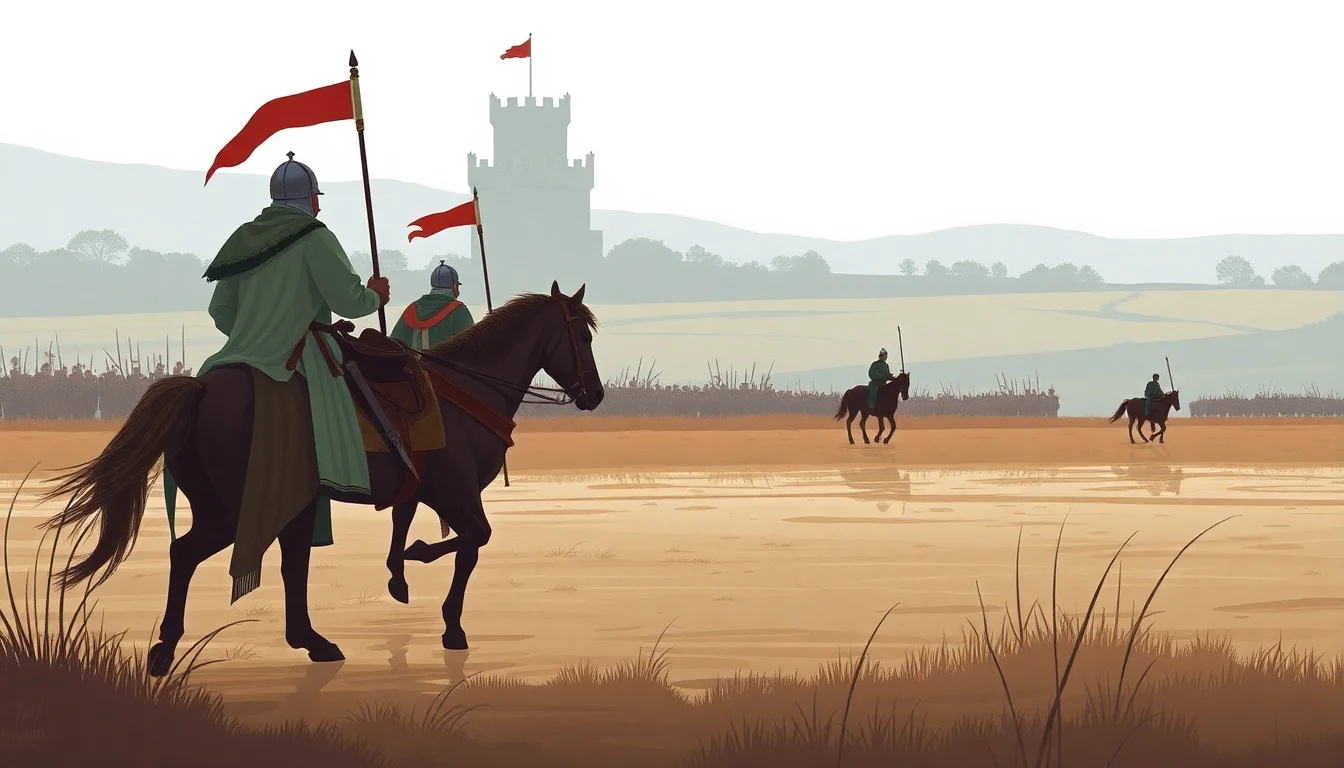
The decisive engagement took place near the village of Azincourt in northern France, in the Pas-de-Calais region. The battlefield itself, a muddy, enclosed field between two woods, played a crucial role in the unfolding events. The narrow terrain funneled the French knights into a killing zone, negating their numerical advantage and exacerbating the chaos. Understanding the geography is key to grasping how such a lopsided victory was even possible, transforming a simple field into a legendary theater of war.
📅 When and Why It Happened
The battle occurred during the autumn of 1415, a period of intense conflict in the protracted Hundred Years' War. King Henry V had launched an invasion of France, aiming to assert his dynastic claims and capture strategic territories. The French, eager to repel the English incursion, amassed a formidable army. The specific date, St. Crispin's Day, has become synonymous with the battle, immortalized in literature and folklore, adding a layer of symbolic weight to the military event itself.
👑 The Key Players: Henry V vs. Charles d'Albret
The primary antagonists were King Henry V of England, a charismatic and determined monarch, and Charles d'Albret, the Constable of France, who commanded the French forces. Henry V, though facing overwhelming odds, demonstrated tactical brilliance and unwavering resolve. Charles d'Albret, on the other hand, represented the French nobility's confidence, which ultimately proved to be their undoing. The clash of these two leaders, embodying their respective nations' ambitions, defined the stakes of the conflict.
🏹 The Longbow's Dominance
The English longbow, wielded by skilled archers, was arguably the most significant technological factor in England's victory. These archers, positioned on the flanks, unleashed volleys of arrows that decimated the charging French knights. The sheer volume and penetrating power of the arrows, capable of piercing armor at range, created a devastating effect. This battle cemented the longbow's reputation as a battlefield equalizer, demonstrating how ranged weaponry could overcome heavily armored cavalry charges.
📉 The Devastating Toll
The Battle of Agincourt resulted in catastrophic losses for the French, with estimates of killed and captured ranging from 6,000 to 10,000 men, including a significant portion of the French nobility. English casualties, in stark contrast, were remarkably low, often cited as being in the hundreds. This disparity in losses highlights the battle's brutal efficiency and its profound impact on the French aristocracy, creating a power vacuum that would influence French politics for years to come.
🏆 Legacy and Cultural Impact
Agincourt's legacy extends far beyond its military significance. It became a powerful symbol of English national pride and resilience, famously depicted in William Shakespeare's play 'Henry V'. The battle's narrative of a small, determined force overcoming a larger enemy has been invoked in countless contexts, shaping perceptions of courage and underdog victories. Its cultural resonance is immense, influencing everything from historical memory to popular depictions of medieval warfare.
🤔 Historical Debates and Controversies
The precise number of combatants and casualties remains a subject of scholarly debate, with figures varying significantly across historical accounts. Another point of contention is the extent to which the French nobility's arrogance and internal divisions contributed to their defeat, versus the sheer tactical genius of Henry V and the effectiveness of the English longbow. The interpretation of the battle's strategic implications for the broader Hundred Years' War also continues to be analyzed by historians.
🗺️ Visiting the Agincourt Battlefield Today
While the original battlefield has been altered by centuries of agriculture and development, the area around Azincourt still holds historical significance. Visitors can explore the region to gain a sense of the terrain that played such a critical role. Local museums and historical societies often provide context and information about the battle, allowing for a more immersive understanding of the events that transpired on that fateful St. Crispin's Day. Planning a visit requires understanding the modern landscape's relationship to the historical one.
📚 Further Reading and Resources
For those seeking to deepen their understanding of the Battle of Agincourt, numerous resources are available. Academic works by historians like Anne Curry and Jonathan Sumption offer detailed analyses. Primary source translations, such as accounts from Jean de Wavrin, provide contemporary perspectives, albeit with their own biases. Documentaries and historical reenactments also offer engaging ways to visualize and comprehend the battle's scale and impact.
Key Facts
- Year
- 1415
- Origin
- France
- Category
- Historical Battles
- Type
- Historical Event
Frequently Asked Questions
What was the primary reason for the Battle of Agincourt?
The Battle of Agincourt was a key engagement during the Hundred Years' War, initiated by King Henry V of England's invasion of France. Henry sought to press his claim to the French throne and capture strategic territories. The French assembled a large army to repel this invasion, leading to the decisive confrontation near Azincourt.
Who were the main commanders at Agincourt?
The English forces were commanded by King Henry V of England himself, known for his military acumen and leadership. The French army was led by Charles d'Albret, the Constable of France, and Jean II of Alençon, among other prominent French nobles. The strategic decisions of these commanders profoundly shaped the battle's outcome.
What was the significance of the English longbow at Agincourt?
The longbow was a critical factor in England's victory. English archers, armed with these powerful bows, unleashed devastating volleys of arrows that disrupted French cavalry charges and inflicted heavy casualties. The longbow's range and rate of fire allowed the outnumbered English to inflict disproportionate damage on the advancing French forces.
How many soldiers fought at Agincourt?
Estimates for the size of the armies vary, but it is widely accepted that the French army was significantly larger than the English. Reports suggest the English numbered around 6,000 to 9,000 men, while the French force could have been as large as 20,000 to 30,000, though some scholars place the French numbers lower. The terrain and tactics, however, negated much of the French numerical advantage.
What were the consequences of the Battle of Agincourt?
The battle was a catastrophic defeat for France, decimating its nobility and severely weakening its military capacity. For England, it was a monumental victory that bolstered Henry V's prestige, strengthened his claim to the French throne, and significantly advanced English military objectives in the Hundred Years' War. It also became a potent symbol of English national identity.
Is the Battle of Agincourt depicted in any famous works?
Yes, the Battle of Agincourt is famously immortalized in William Shakespeare's play 'Henry V'. The play's St. Crispin's Day speech is one of the most iconic speeches in English literature, celebrating courage and brotherhood in the face of overwhelming odds. The battle has also been the subject of numerous historical accounts, films, and documentaries.