
Contents
Overview
The story of ancient Chinese agriculture is a sprawling epic, beginning with the independent domestication of crops in distinct regions. In the Yellow River basin, the cultivation of foxtail millet and broom-corn millet took root, marking the dawn of northern Chinese agriculture. Simultaneously, in the Yangtze River valley, early peoples began domesticating rice, a process that would eventually make it the staple food for billions. The Neolithic period saw the establishment of settled farming communities, evidenced by archaeological finds at sites like Peiligang and Hemudu, showcasing early pottery and agricultural tools. The Shang Dynasty employed sophisticated irrigation systems. The Zhou Dynasty codified agricultural practices and land distribution systems, like the jingtian system, further solidifying agriculture's central role. This long trajectory, from scattered hunter-gatherers to organized agrarian states, is a testament to human ingenuity and adaptation over millennia. Ancient Chinese agriculture was characterized by its intensive and adaptive nature, driven by the need to feed a growing population on limited arable land. Farmers developed sophisticated techniques such as crop rotation to maintain soil fertility, particularly with the introduction of soybeans as a nitrogen-fixing crop. Irrigation was paramount, with elaborate systems of canals, reservoirs, and water-lifting devices like the dragon-spine pump (a precursor to the chain pump) being developed, especially for rice cultivation in the south. Oxen were used for plowing and manure for fertilizer, while pigs and chickens provided protein. The understanding of seasonal cycles and weather patterns, codified in the Twenty-Four Solar Terms, guided planting and harvesting, demonstrating a deep empirical knowledge of the environment. The imperial bureaucracy itself, through ministries dedicated to agriculture and water management, played a critical role in organizing and regulating farming practices across vast territories. The cyclical nature of farming informed concepts of yin and yang, harmony with nature, and the importance of order and balance. The state's reliance on agriculture shaped its political structure, with rulers often performing symbolic plowing ceremonies to legitimize their rule and ensure good harvests. This agrarian foundation also fueled technological advancements that had broader societal impacts, from metallurgy for tools to hydraulic engineering for water management, influencing everything from urban planning to military logistics.
🎵 Origins & History
The story of ancient Chinese agriculture is a sprawling epic, beginning with the independent domestication of crops in distinct regions. In the Yellow River basin, the cultivation of foxtail millet and broom-corn millet took root, marking the dawn of northern Chinese agriculture. Simultaneously, in the Yangtze River valley, early peoples began domesticating rice, a process that would eventually make it the staple food for billions. The Neolithic period saw the establishment of settled farming communities, evidenced by archaeological finds at sites like Peiligang and Hemudu, showcasing early pottery and agricultural tools. The Shang Dynasty employed sophisticated irrigation systems. The subsequent Zhou Dynasty codified agricultural practices and land distribution systems, like the jingtian system, further solidifying agriculture's central role. This long trajectory, from scattered hunter-gatherers to organized agrarian states, is a testament to human ingenuity and adaptation over millennia.
⚙️ How It Works
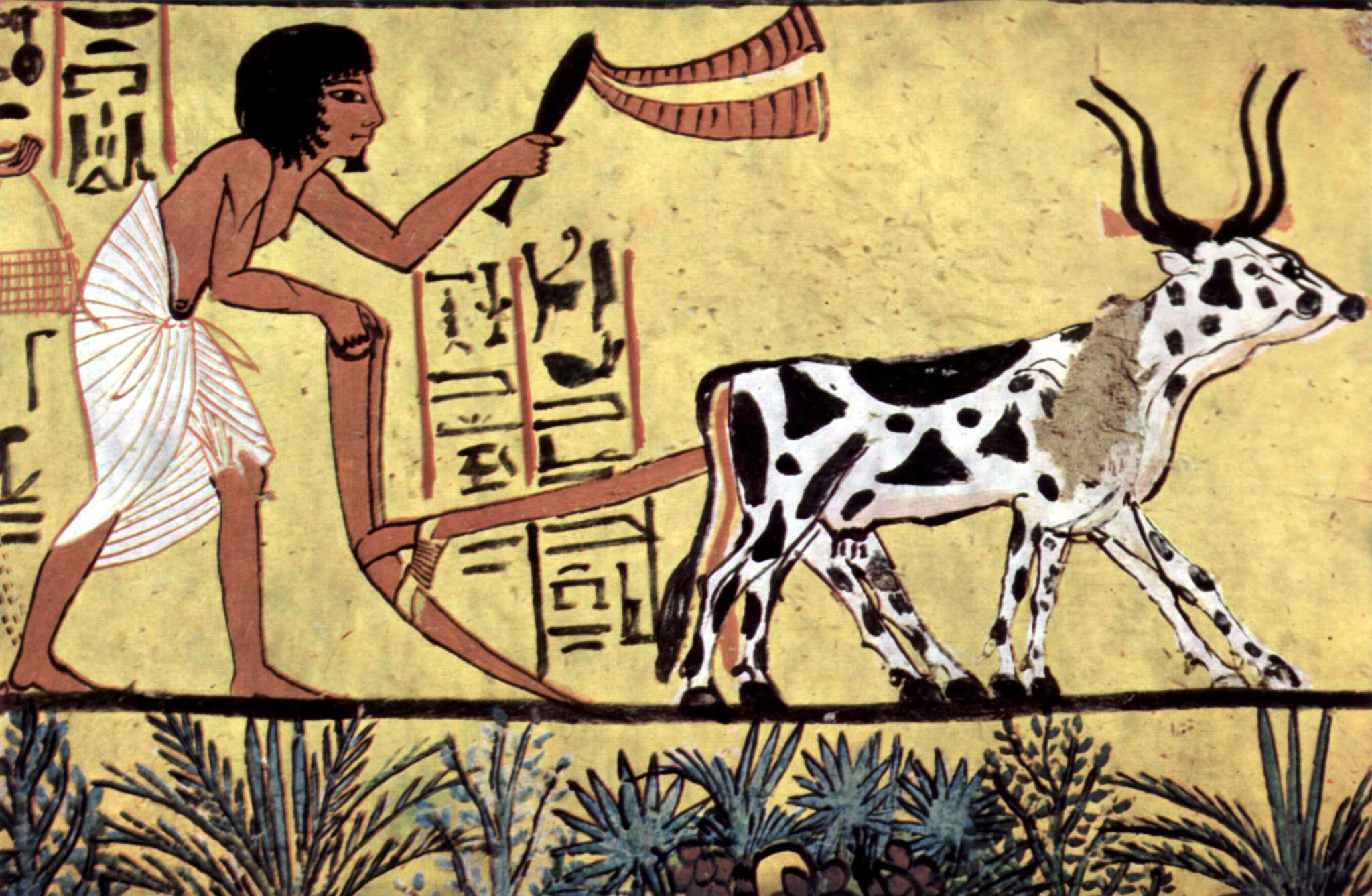
Ancient Chinese agriculture was characterized by its intensive and adaptive nature, driven by the need to feed a growing population on limited arable land. Farmers developed sophisticated techniques such as crop rotation to maintain soil fertility, particularly with the introduction of soybeans as a nitrogen-fixing crop. Irrigation was paramount, with elaborate systems of canals, reservoirs, and water-lifting devices like the dragon-spine pump (a precursor to the chain pump) being developed, especially for rice cultivation in the south. Oxen were used for plowing and manure for fertilizer, while pigs and chickens provided protein. The understanding of seasonal cycles and weather patterns, codified in the Twenty-Four Solar Terms, guided planting and harvesting, demonstrating a deep empirical knowledge of the environment.
📊 Key Facts & Numbers
The imperial bureaucracy itself, through ministries dedicated to agriculture and water management, played a critical role in organizing and regulating farming practices across vast territories. The cyclical nature of farming informed concepts of yin and yang, harmony with nature, and the importance of order and balance. The state's reliance on agriculture shaped its political structure, with rulers often performing symbolic plowing ceremonies to legitimize their rule and ensure good harvests. This agrarian foundation also fueled technological advancements that had broader societal impacts, from metallurgy for tools to hydraulic engineering for water management, influencing everything from urban planning to military logistics.
👥 Key People & Organizations
While ancient Chinese agriculture was a collective endeavor, certain figures and institutions stand out. The imperial bureaucracy itself, through ministries dedicated to agriculture and water management, played a critical role in organizing and regulating farming practices across vast territories. The various imperial academies and agricultural bureaus established over centuries served as centers for knowledge dissemination and technological advancement.
🌍 Cultural Impact & Influence
Ancient Chinese agriculture was not merely about sustenance; it was deeply woven into the fabric of Chinese culture and philosophy. The cyclical nature of farming informed concepts of yin and yang, harmony with nature, and the importance of order and balance. The reverence for the land and the agricultural cycle is evident in countless poems, paintings, and festivals. The filial piety expected of children extended to caring for the land passed down through generations. The state's reliance on agriculture shaped its political structure, with rulers often performing symbolic plowing ceremonies to legitimize their rule and ensure good harvests. This agrarian foundation also fueled technological advancements that had broader societal impacts, from metallurgy for tools to hydraulic engineering for water management, influencing everything from urban planning to military logistics.
⚡ Current State & Latest Developments
While the core principles of ancient Chinese agriculture remain foundational, its direct application has evolved significantly. Modern Chinese agriculture, while still a massive global force, is characterized by large-scale, mechanized operations and the integration of advanced biotechnology. However, the legacy of ancient practices persists in the continued importance of rice and wheat cultivation, the sophisticated water management systems still in use in some regions, and the cultural significance attached to farming. Contemporary agricultural research in China often draws upon historical knowledge to address challenges like soil degradation and water scarcity, seeking sustainable solutions that echo the wisdom of past generations. The ongoing development of vertical farming and precision agriculture represents a new frontier, yet the fundamental human relationship with the soil cultivated over millennia continues to shape the nation's food security and identity.
🤔 Controversies & Debates
Debates surrounding ancient Chinese agriculture often center on the precise timelines of crop domestication and the extent of technological diffusion. For instance, the exact origins and spread of rice cultivation in Southeast Asia and its influence on China remain subjects of ongoing archaeological and genetic research. The effectiveness and widespread adoption of systems like the jingtian system are also debated, with some scholars arguing it was more of an idealized model than a consistently implemented reality. Furthermore, the role of state intervention versus local innovation in driving agricultural progress is a recurring point of contention. The environmental impact of intensive farming practices, such as deforestation and soil erosion, particularly in the Yellow River basin, is also a critical area of discussion, highlighting the long-term consequences of human manipulation of the environment.
🔮 Future Outlook & Predictions
The future of agriculture in China, and globally, will undoubtedly be shaped by the lessons learned from its ancient past. As climate change presents unprecedented challenges, the resilience and adaptability demonstrated by ancient Chinese farmers will be crucial. Innovations in genetically modified crops, hydroponics, and aquaponics are poised to transform food production, potentially reducing reliance on traditional land-based methods. The integration of artificial intelligence in farming, from predictive analytics for weather patterns to automated harvesting, promises to further revolutionize efficiency. However, the challenge will be to balance these technological advancements with the sustainability principles and cultural reverence for the land that characterized ancient Chinese agriculture, ensuring food security without
💡 Practical Applications
Ancient Chinese agriculture provided the foundation for many practical applications that continue to influence modern farming. The development of sophisticated irrigation techniques, such as canals and water-lifting devices, laid the groundwork for efficient water management in agriculture. Techniques like crop rotation and the use of nitrogen-fixing crops, such as soybeans, are still fundamental to maintaining soil health and fertility. The empirical knowledge of seasonal cycles, codified in the Twenty-Four Solar Terms, informs agricultural planning and timing, even in modern contexts. The domestication and selective breeding of crops and livestock established foundational genetic resources for subsequent agricultural development. The principles of intensive farming, adapted to local conditions, continue to be relevant in maximizing yield from available land.
Key Facts
- Category
- history
- Type
- topic