
Contents
Overview
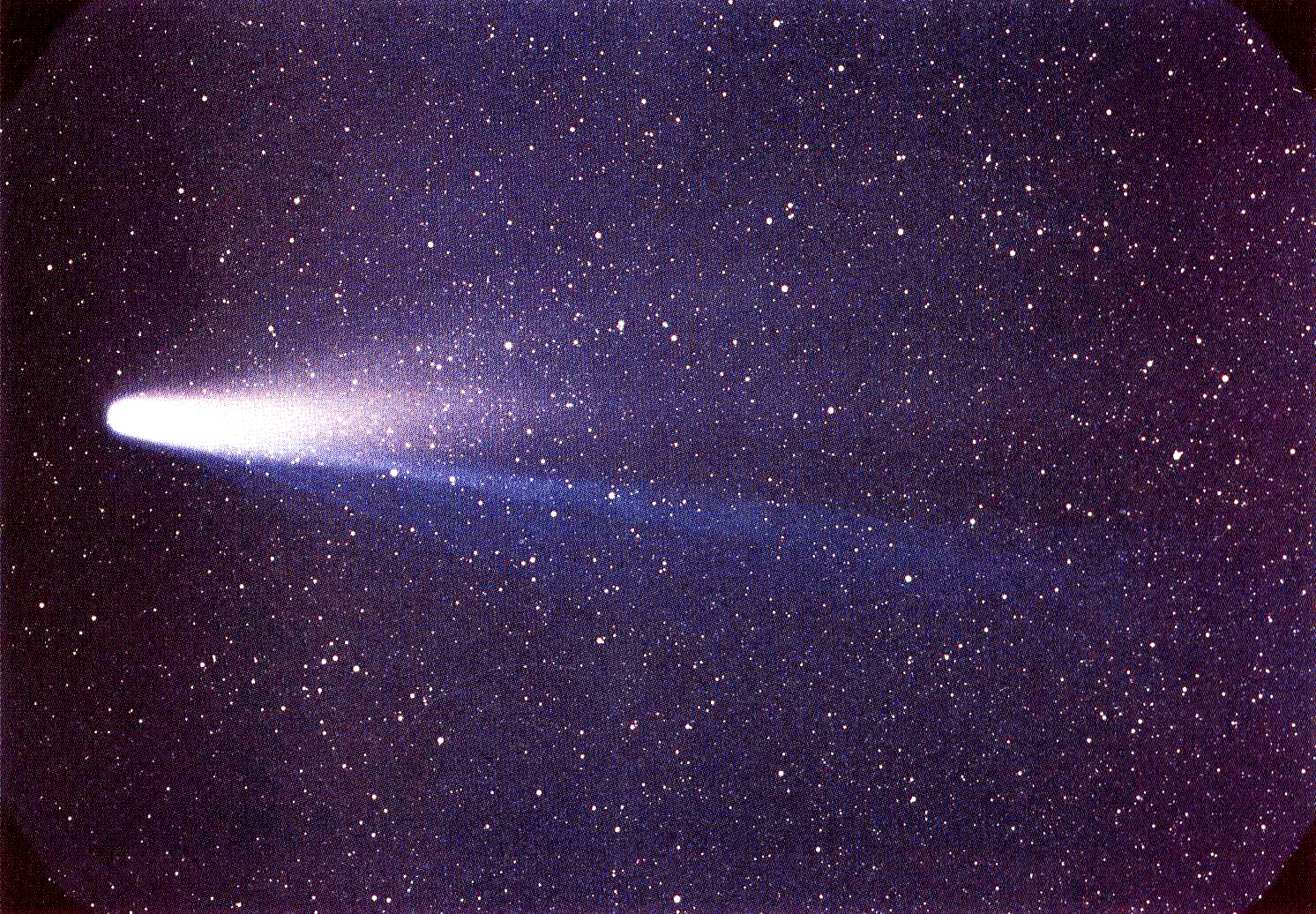
A catalog of comets is a systematic compilation of known cometary bodies, detailing their orbital parameters, physical characteristics, and observational history. These catalogs serve as indispensable tools for astronomers, enabling the study of cometary evolution, the composition of the early Solar System, and the potential impact hazards posed by these icy celestial objects. From pioneering efforts to modern digital databases like the JPL Small-Body Database, these collections have grown exponentially with each new discovery and observational mission. They are crucial for predicting cometary appearances, understanding their origins in regions like the Oort Cloud and Kuiper Belt, and for planning missions like the Rosetta to study comets up close. The ongoing discovery of new comets, often facilitated by automated sky surveys such as Catalina and Pan-STARRS, continuously expands these catalogs, revealing the dynamic nature of our solar neighborhood.
🎵 Origins & History
The concept of cataloging comets, while seemingly modern, has roots stretching back to ancient astronomical observations. Early astronomers, from the Chinese to the Greeks, meticulously recorded cometary appearances, noting their transient nature and often associating them with omens. The true genesis of systematic cataloging, however, began with groundbreaking work in 1705. By analyzing historical records, it was deduced that a comet observed in 1531, 1607, and 1682 was, in fact, the same object, and its return was successfully predicted for 1758. This marked a paradigm shift from mere observation to predictive astronomy. The 19th and 20th centuries saw the formalization of these efforts with the establishment of astronomical observatories and the development of standardized orbital elements, leading to comprehensive lists compiled by figures like Charles Messier (though his catalog primarily focused on nebulae and star clusters, it included some comets) and later, dedicated comet hunters.
⚙️ How It Works
A comet catalog functions by storing and organizing crucial data for each identified comet. The core information includes orbital elements such as the semi-major axis, eccentricity, inclination, and longitude of the ascending node, which precisely define a comet's path around the Sun. Physical characteristics, when known, are also recorded, including estimated nucleus size, albedo, and sometimes spectral data indicating composition. Observational data, such as the date and location of sightings, brightness estimates, and the presence of a coma or tail, are vital for tracking and refining orbital calculations. Modern catalogs are typically digital databases, allowing for rapid searching, sorting, and analysis, often linked to ephemerides (predictive positions) generated by sophisticated orbital mechanics software. The Minor Planet Center (MPC) plays a pivotal role in verifying and disseminating orbital data for both asteroids and comets.
📊 Key Facts & Numbers
The number of cataloged comets has exploded in recent decades. The vast majority of new comets are discovered by surveys like Pan-STARRS and the Catalina Sky Survey, which scan the skies continuously. The Oort Cloud is estimated to contain trillions of comets, though only a fraction are perturbed into observable orbits. Short-period comets (orbital periods less than 200 years) account for roughly 1,000 cataloged objects, while long-period comets, originating from the Oort Cloud, make up the bulk of discoveries.
👥 Key People & Organizations
Key figures in the history of comet cataloging include Edmond Halley, whose 1705 prediction established the concept of periodic comets. Jan Oort's 1950 hypothesis proposed the existence of a vast spherical cloud of icy bodies at the solar system's edge, now known as the Oort Cloud, which is the primary reservoir for long-period comets. Fred Whipple developed the 'dirty snowball' model of cometary composition in the 1950s, fundamentally changing our understanding of their physical nature. Organizations like the International Astronomical Union (IAU) are responsible for the official naming and numbering of comets. Major space agencies such as NASA and the ESA operate missions that directly contribute observational data, like the Rosetta to comet 67P/Churyumov–Gerasimenko and the Deep Impact mission.
🌍 Cultural Impact & Influence
Comets have long captured the human imagination, appearing in mythology, folklore, and art across cultures. Their sudden appearance and dramatic tails have often been interpreted as harbingers of change, divine messages, or ill omens, influencing narratives from ancient Chinese chronicles to medieval European texts. The scientific cataloging of comets has transformed them from mysterious portents into objects of intense scientific study, fueling interest in space exploration and astrobiology. The discovery of organic molecules on comets, such as those found by the Rosetta spacecraft, has further fueled speculation about their role in seeding early Earth with the building blocks of life. The visual spectacle of bright comets continues to inspire public fascination and engagement with astronomy.
⚡ Current State & Latest Developments
The current state of comet cataloging is characterized by an ever-increasing rate of discovery, driven by advanced automated sky surveys and dedicated observational programs. Projects like the Vera C. Rubin Observatory (formerly LSST) are poised to discover thousands more comets and potentially Near-Earth Objects (NEOs) annually. Missions are increasingly focused on characterizing cometary nuclei and composition, with recent flybys and orbiters providing unprecedented detail. The study of cometary activity, including outgassing and dust ejection, is a major focus. Furthermore, the cataloging effort is increasingly integrated with asteroid databases, reflecting the blurred lines between these two types of small solar system bodies, with some objects exhibiting characteristics of both.
🤔 Controversies & Debates
One of the primary debates surrounding comet cataloging involves the definition and classification of objects that exhibit both asteroidal and cometary characteristics, often termed 'main-belt comets' or 'active asteroids.' The origin of short-period comets, particularly their potential capture from the Oort Cloud versus formation within the Kuiper Belt, remains an area of active research and debate. Another controversy arises from the potential for misidentification or inaccurate orbital calculations, which can lead to duplicate entries or incorrect predictions of future appearances. The sheer volume of data generated by modern surveys also presents challenges in verification and curation, leading to discussions about the most efficient and reliable methods for managing these vast astronomical datasets.
🔮 Future Outlook & Predictions
The future of comet cataloging is intrinsically linked to advancements in observational technology and space exploration. The Vera C. Rubin Observatory will revolutionize the discovery rate of comets and potentially NEOs, leading to more comprehensive catalogs. Future missions will likely target specific comets for in-situ analysis, providing ground truth data to refine catalog entries. There is also a growing interest in cataloging and characterizing interstellar objects, such as ʻOumuamua and Comet Borisov, which originate from beyond our solar system. The development of more sophisticated orbital models, incorporating non-gravitational forces and planetary perturbations, will improve the accuracy of cometary ephemerides and long-term predictions, crucial for hazard assessment and mission planning.
💡 Practical Applications
Comet catalogs have significant practical applications, most notably in planetary defense. By cataloging comets and tracking their orbits, astronomers can identify potential impact threats to Earth. This information is vital for organizations like the International Asteroid Warning Network (IAWN) and NASA's Planetary Defense Coordination Office to assess risks and develop mitigation strategies. Comets are also valuable targets for space missions, providing insights into the primordial conditions of the solar system. Studying their composition can reveal clues about the formation of planets and the delivery of water and organic molecules to early Earth. Furthermore, the precise orbital data within catalogs is essential for mission planning, enabling spacecraft to
Key Facts
- Category
- science
- Type
- topic