
Contents
Overview
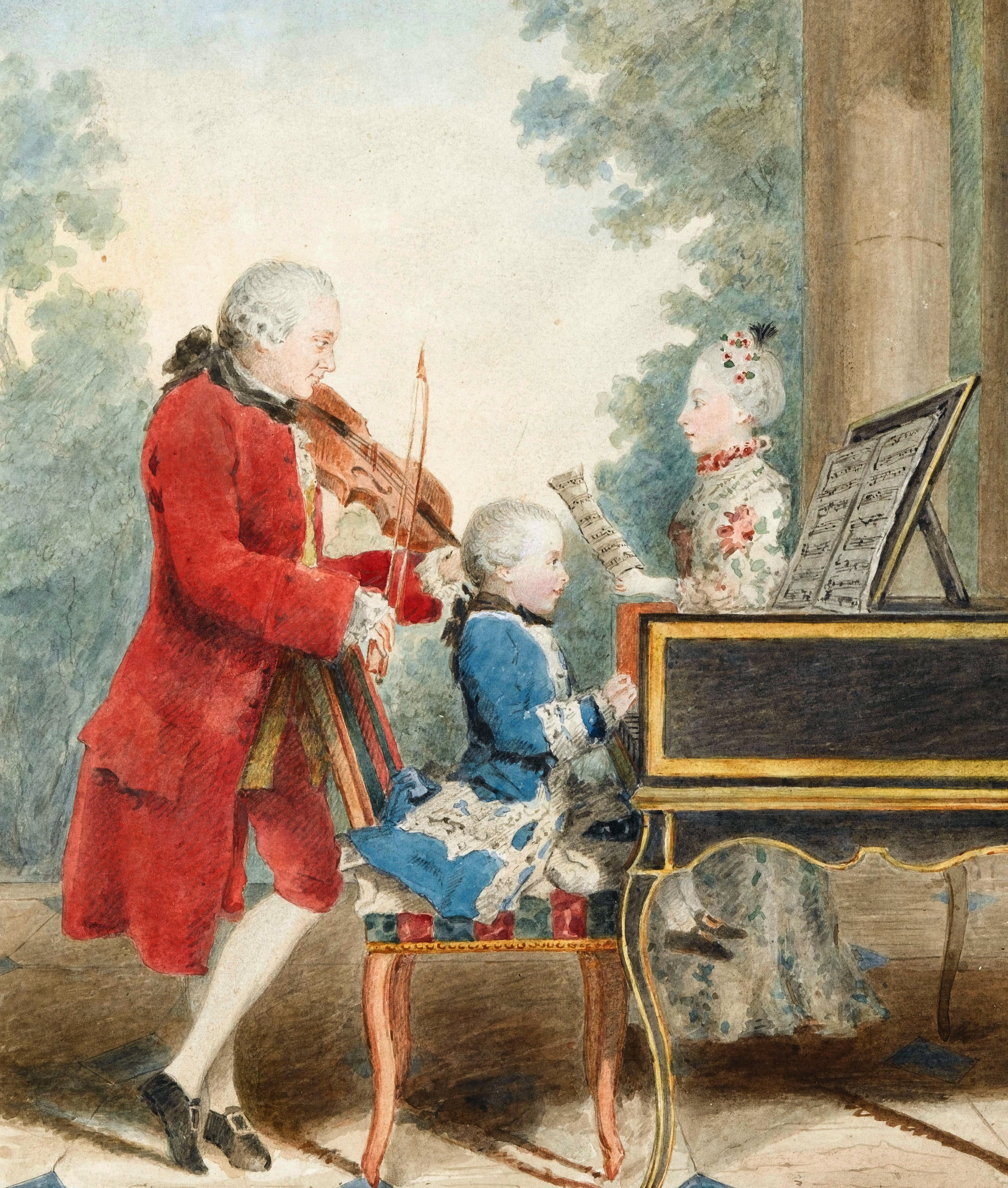
The Classical period in Western music represents a pivotal transition between the ornate complexity of the Baroque era and the emotional intensity of the Romantic period. Characterized by its emphasis on clarity, balance, and formal structure, this era saw the rise of homophonic texture – a clear melody supported by subordinate harmony – though contrapuntal techniques remained vital. Composers embraced the 'style galant,' favoring lightness and elegance over the Baroque's grandeur, and introduced greater dynamic contrast and orchestral expansion. The piano, with its ability to play a wider range of dynamics (hence its original name, fortepiano), supplanted the harpsichord as the dominant keyboard instrument. This period laid the groundwork for many of the musical forms and conventions that continue to influence Western classical music today.
🎵 Origins & History
The Classical period in music emerged as a reaction against the elaborate ornamentation and complex polyphony of the late Baroque era. The Enlightenment's emphasis on reason, order, and humanism profoundly shaped musical aesthetics, favoring balance, symmetry, and emotional restraint over Baroque extravagance. Key centers of development included Vienna, where composers forged the symphonic and chamber music traditions, and later, Bonn and Vienna, where early Ludwig van Beethoven began to push the boundaries of the era, bridging it to Romanticism. The decline of the aristocracy's exclusive patronage and the rise of public concerts also influenced musical production, demanding more accessible and engaging works.
⚙️ How It Works
Musically, the Classical period is defined by its move towards homophony, where a distinct melody is supported by chordal accompaniment, a stark contrast to the Baroque's intricate contrapuntal textures. The 'style galant' epitomized this shift, prioritizing elegance, clarity, and a singable melodic line. Formal structures became paramount, with the development and refinement of forms like the sonata form, symphony, string quartet, and concerto. Composers utilized clear phrasing, balanced melodic periods, and predictable harmonic progressions, often employing Alberti bass figures in keyboard music. While the orchestra grew in size and instrumental variety, with the clarinet becoming a standard member, the emphasis remained on controlled expression and structural integrity, avoiding the extreme emotionalism that would characterize the subsequent Romantic era. Contrast, both in dynamics (aided by the piano's capabilities) and tempo, became a crucial element within pieces.
📊 Key Facts & Numbers
The Classical period saw a significant increase in the output and popularity of orchestral and chamber music. The string quartet solidified its four-movement structure, with hundreds of such works composed by figures like Haydn and Wolfgang Amadeus Mozart. Operas also flourished, with Mozart's works like 'The Marriage of Figaro' (1786) and 'Don Giovanni' (1787) representing pinnacles of the genre. Public concerts, which began to gain traction in the mid-18th century, saw attendance figures in the hundreds, and ticket prices varied, but accessibility increased compared to the Baroque era. The average lifespan of a prominent composer during this period was around 60 years, with many producing prolific bodies of work within their careers.
👥 Key People & Organizations
The titans of the Classical period are undeniable: Joseph Haydn (1732-1809), often called the 'Father of the Symphony' and 'Father of the String Quartet,' established many of the foundational forms. Wolfgang Amadeus Mozart (1756-1791), a prodigious talent, excelled in every genre, from opera to symphonies to concertos, leaving behind over 600 cataloged works. Ludwig van Beethoven (1770-1827), whose early works are firmly rooted in the Classical style, began to introduce revolutionary elements that presaged Romanticism. Other significant figures include Christoph Willibald Gluck, who reformed opera, and Muzio Clementi, a virtuoso pianist and composer. The Esterházy family, patrons of Haydn, and the Viennese aristocracy were crucial organizational forces, supporting composers and commissioning works.
🌍 Cultural Impact & Influence
The Classical period's influence on subsequent musical development is immense. Its emphasis on clear form, melodic clarity, and balanced structure became the bedrock upon which later composers built. The sonata form, perfected during this era, remains a fundamental organizational principle in instrumental music. The symphony orchestra, standardized in size and instrumentation, became the dominant ensemble for large-scale orchestral works for over a century. The piano's ascendancy fundamentally altered keyboard technique and repertoire. The aesthetic ideals of elegance, order, and controlled emotion resonated beyond music, influencing architecture and literature of the Neoclassical movement. The very concept of the 'composer' as an independent artist, rather than solely a craftsman in service to a patron, began to solidify during this period, a shift that would accelerate dramatically in the Romantic era.
⚡ Current State & Latest Developments
While the Classical period is firmly established in music history, its music continues to be performed and studied extensively in 2024. Orchestras worldwide, such as the Vienna Philharmonic and the New York Philharmonic, regularly program works by Haydn, Mozart, and Beethoven. Modern performance practices often involve historically informed performance (HIP) ensembles, like Les Arts Florissants, that use period instruments and techniques to recreate the sound of the era. Digital streaming platforms like Spotify and Apple Music offer vast libraries of Classical period recordings, making these works more accessible than ever. The ongoing scholarly research by institutions like the Mozart Opera House continues to uncover new insights into the period's compositions and context.
🤔 Controversies & Debates
A primary debate surrounding the Classical period centers on its precise chronological boundaries and the degree to which it was a unified style. Some scholars argue for an earlier start date, citing the 'style galant' and early works of Carl Philipp Emanuel Bach in the 1730s, while others extend it closer to 1820 to encompass the late works of Ludwig van Beethoven. Another point of contention is the perceived emotional restraint; critics sometimes label it as 'cold' or 'formulaic' compared to the Baroque's passion or Romanticism's drama. However, proponents argue that the period's emotional depth lies in its subtlety, structural elegance, and the profound humanism embedded within its formal clarity. The role of patronage versus the emerging public concert system also sparks debate regarding artistic freedom and commercial pressures.
🔮 Future Outlook & Predictions
The future of Classical period music lies in continued exploration and reinterpretation. Advances in artificial intelligence may offer new analytical tools for understanding compositional techniques and performance nuances, potentially even aiding in the reconstruction of lost works or the creation of stylistically appropriate new compositions. The trend towards historically informed performance is likely to deepen, with more ensembles specializing in period instruments and research. Furthermore, cross-disciplinary collaborations, perhaps linking Classical music aesthetics with contemporary visual arts or digital media, could introduce new audiences to its enduring appeal. The enduring popularity of composers like Mozart and Beethoven suggests their music will remain a cornerstone of classical repertoire for centuries to come, continually inspiring new generations of performers and listeners.
💡 Practical Applications
The practical applications of Classical period music are primarily found in performance, education, and therapeutic contexts. Its works form the core repertoire for aspiring musicians studying at conservatories like the Juilliard School and performing in orchestras and chamber ensembles globally. The clear structures and melodic clarity make it ideal for music education, teaching fundamental concepts of harmony, form, and phrasing. Beyond performance, Classical music, particularly pieces by Mozart, is often utilized in therapeutic settings for its perceived calming and cognitive benefits, with stu
Key Facts
- Category
- history
- Type
- topic