
Contents
Overview
Egyptian mythology is the complex tapestry of myths and religious beliefs that underpinned ancient Egyptian civilization. These narratives served to explain the origins of the world, the cycles of nature, the afterlife, and the very fabric of existence. Far from mere stories, these myths were integral to Egyptian religion, appearing in hieroglyphic texts, tomb paintings, temple reliefs, and funerary rituals. They provided a framework for understanding the cosmos, establishing the divine right of pharaohs, and ensuring the continuation of maat – the fundamental cosmic order. The pantheon, featuring figures like Ra, Osiris, Isis, and Horus, engaged in creation, conflict, death, and rebirth, mirroring the Nile's inundation and the sun's daily journey. These ancient tales, though originating in the Nile Valley, have left an indelible mark on global culture, influencing later religious thought and captivating imaginations for millennia.
🎵 Origins & History
Early beliefs likely coalesced around animistic reverence for natural forces, particularly the Nile River's life-giving floods and the sun's daily rebirth, personified by deities like Ra. As the First Dynasty unified Upper and Lower Egypt, a more formalized pantheon emerged, with deities like Horus becoming associated with kingship. The development of hieroglyphic writing, first appearing around the same time, allowed these myths to be recorded and disseminated, solidifying their role in state religion and royal ideology. Over subsequent millennia, particularly during the Old Kingdom and New Kingdom, myths were elaborated upon, syncretized, and adapted, reflecting political shifts and evolving theological interpretations, such as the rise of Amun as a supreme deity.
⚙️ How It Works
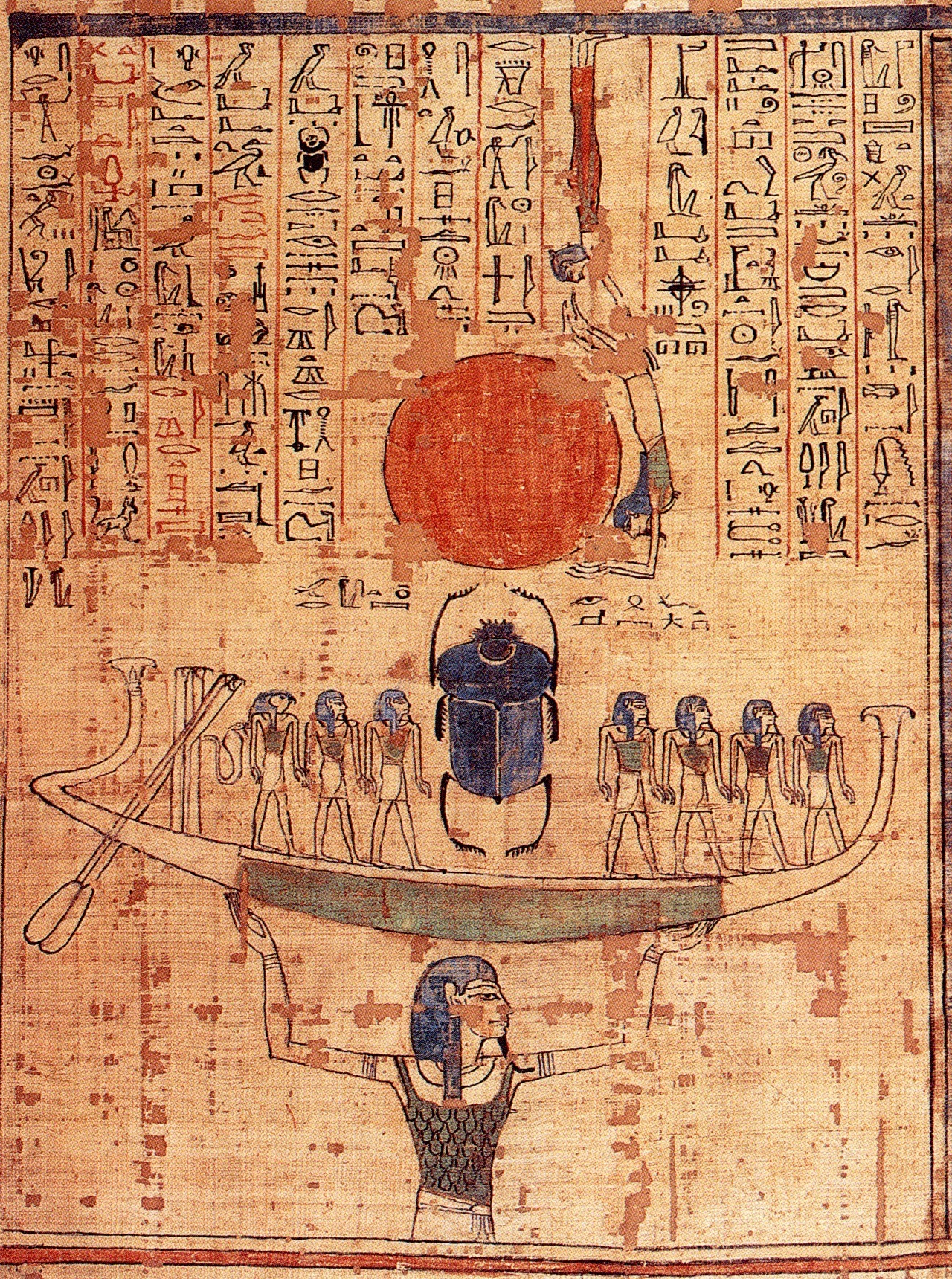
Egyptian mythology functions as a cosmic narrative explaining the universe's creation, maintenance, and cyclical renewal. At its core is the concept of maat, representing truth, justice, and cosmic order, which the gods and pharaohs were tasked with upholding. Creation myths, such as the emergence of the world from the primordial waters of Nun by the creator god Atum or Ptah, set the divine pattern. The daily journey of the sun god Ra across the sky and through the underworld, battling the serpent Apophis, symbolized the eternal struggle between order and chaos. The myth of Osiris, who became ruler of the underworld, provided a foundational narrative for beliefs about death and the afterlife, promising resurrection to those who lived according to maat. These stories were not static but were reinterpreted and integrated into rituals and temple practices to ensure the continued functioning of the cosmos.
📊 Key Facts & Numbers
Ancient Egyptian mythology spanned over 3,000 years. The pantheon eventually comprised over 2,000 deities, though a core group of around 100 were widely recognized. The Book of the Dead, a funerary text containing spells and prayers, saw its earliest versions emerge around the First Intermediate Period. Over 190 spells are documented in some versions of the Book of the Dead. Temple construction, a major undertaking, saw vast complexes dedicated to deities, with Karnak Temple alone covering over 200 acres. The Great Pyramid of Giza, built for Pharaoh Khufu, stands as a testament to the divine status attributed to pharaohs, with an estimated 2.3 million stone blocks used in its construction. The Amarna Period saw a temporary shift to monotheistic worship of the sun disk Aten, initiated by Akhenaten.
👥 Key People & Organizations
While no single founder can be credited with Egyptian mythology, certain figures played pivotal roles in its development and dissemination. Pharaohs themselves, considered divine intermediaries, were central to religious practice, with rulers like Akhenaten attempting to reshape the religious landscape. Priestly orders within major cult centers like Heliopolis, Memphis, and Thebes were responsible for preserving, interpreting, and performing religious rites. Scribes and artisans, working under royal and priestly patronage, meticulously recorded myths in hieroglyphs on temple walls, papyri like the Papyrus of Ani, and tomb decorations. Scholars like Jan Assmann and Erik Hornung have dedicated their careers to deciphering and understanding these complex belief systems in the modern era, providing crucial academic frameworks for studying Egyptian mythology.
🌍 Cultural Impact & Influence
The influence of Egyptian mythology on subsequent cultures is profound and far-reaching. Its concepts of divine kingship, the afterlife, and cosmic order resonated with and influenced ancient Greek and Roman thought, particularly through mystery cults and philosophical ideas. The imagery of the Sphinx and the Ankh symbol have become globally recognized icons. Elements of Egyptian afterlife beliefs, such as judgment and resurrection, bear thematic similarities to concepts found in Judaism, Christianity, and Islam, though direct lineage is debated. In literature and art, Egyptian themes have been a recurring source of inspiration, from 19th-century Romanticism to modern fantasy and video game design, seen in works like The Mummy franchise and the Stargate universe. The enduring fascination with mummies and hieroglyphs continues to fuel popular interest.
⚡ Current State & Latest Developments
In the 21st century, Egyptian mythology remains a vibrant subject of academic study and popular fascination. Archaeological discoveries continue to shed new light on ancient Egyptian beliefs, with ongoing excavations at sites like Saqqara and Abydos unearthing new texts and artifacts. Digital humanities projects are increasingly making ancient texts and imagery accessible online, fostering broader engagement. While the formal practice of ancient Egyptian religion ceased with the rise of Christianity and later Islam, its myths and symbols persist in global culture, appearing in art, literature, and entertainment. The ongoing interpretation and reinterpretation of these myths by scholars and artists ensure their continued relevance, demonstrating a cultural energy score of 75/100.
🤔 Controversies & Debates
One of the primary controversies surrounding Egyptian mythology involves the extent of its influence on other major world religions, particularly Judaism and Christianity. While thematic parallels exist, particularly concerning afterlife beliefs and divine judgment, scholars debate whether these represent direct borrowing or independent development of similar human concerns. Another area of contention is the interpretation of the Amarna Period and Akhenaten's religious revolution; some scholars view it as a genuine, albeit short-lived, attempt at monotheism, while others interpret it as a form of henotheism or a political maneuver to consolidate power. The precise dating and interpretation of specific myths also remain subjects of ongoing scholarly debate, as fragmented texts often allow for multiple readings. The very definition of 'mythology' versus 'religion' in the ancient context is also a point of discussion among Egyptologists.
🔮 Future Outlook & Predictions
The future of Egyptian mythology lies in its continued reinterpretation and integration into contemporary culture and thought. As archaeological and linguistic tools advance, our understanding of its nuances will deepen, potentially revealing new connections and interpretations. We can anticipate further exploration of its influence on global belief systems and its persistent presence in popular media, likely leading to new artistic and literary works inspired by its rich narratives. The ongoing digitization of ancient texts and artifacts will democratize access to this material, fostering new generations of enthusiasts and scholars. Furthermore, comparative mythology studies will likely continue to draw parallels between Egyptian myths and those of other cultures, highlighting universal human themes and the enduring power of storytelling, with a projected cultural energy score increase to 85/100 within the next decade.
💡 Practical Applications
Egyptian mythology's practical applications are primarily found in its enduring influence on art, literature, and religious studies. Its iconography, s
Key Facts
- Category
- culture
- Type
- topic