
Contents
Overview
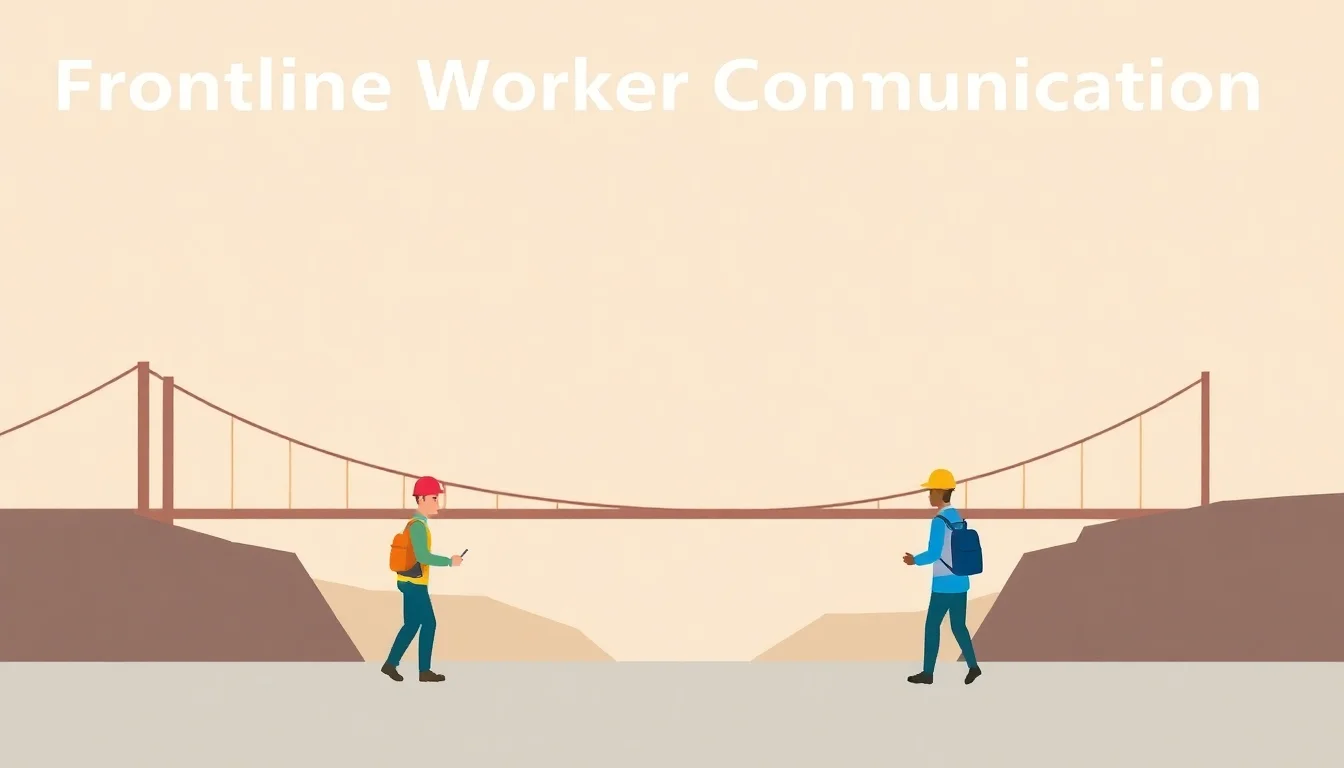
Frontline worker communication refers to the systems and strategies designed to connect and inform employees who are not primarily desk-bound. Think retail associates, healthcare providers, manufacturing staff, and field service technicians. It's about ensuring everyone, regardless of their location or role, receives timely, relevant information. This isn't just about emails; it encompasses mobile apps, digital signage, shift-scheduling platforms, and even simple bulletin boards. The goal is to foster a connected workforce, boost engagement, and improve operational efficiency by closing the information gap that often separates management from the people on the ground. This area has seen significant evolution from the days of paper memos and overhead announcements, driven by the need for real-time updates and two-way dialogue.
👥 Who Needs This?
This is essential for any organization with a substantial non-desk workforce. Industries like Hospitality Industry, Retail Sector, Manufacturing Operations, and Healthcare Systems are prime candidates. If your organization struggles with inconsistent messaging, low employee engagement, high turnover, or operational inefficiencies stemming from poor information flow, then bridging this gap is critical. It’s for leaders who understand that their frontline staff are the face and hands of their business, and their ability to perform is directly tied to how well they are informed and supported. Companies like Starbucks and Walmart have invested heavily in these solutions to manage their vast employee networks.
🛠️ Core Components & Tools
At its heart, effective frontline communication relies on a blend of technology and thoughtful strategy. Key components include mobile communication platforms (like Beekeeper or Staffbase), digital signage for break rooms and common areas, shift management software (e.g., Deputy or When I Work), and intranets tailored for mobile access. Beyond tools, it requires clear communication protocols, designated information channels, and mechanisms for feedback. The 'how' is as important as the 'what'; ensuring accessibility, ease of use, and relevance for every frontline employee is paramount. The integration of these tools aims to create a unified communication ecosystem.
📈 Impact & ROI
The return on investment for robust frontline communication is substantial, though often hard to quantify precisely. Improved communication directly correlates with higher employee engagement scores, leading to reduced turnover rates and associated recruitment costs. Operational efficiencies are gained through better task management, reduced errors, and faster problem resolution. For instance, a manufacturing plant that can instantly alert all relevant personnel to a safety hazard via a mobile app can prevent costly downtime and injuries. Customer satisfaction also sees a boost when frontline staff are well-informed and empowered to serve. Studies by organizations like Gallup consistently link employee engagement to business outcomes.
⚖️ Challenges & Controversies
The path to seamless frontline communication is fraught with challenges and ongoing debates. A major hurdle is digital literacy and access among a diverse workforce; not everyone has a smartphone or is comfortable with new technology. The sheer volume of information can also be overwhelming, leading to message fatigue. There's a constant tension between top-down directives and fostering genuine two-way dialogue. Critics argue that many 'solutions' are simply digital versions of old, ineffective methods, failing to truly empower workers. The debate also centers on data privacy and the potential for over-surveillance when using mobile communication tools, a concern highlighted by worker advocacy groups.
💡 Best Practices & Strategies
Successful implementation hinges on a few key principles. First, know your audience: tailor communication to the specific needs and tech-savviness of your frontline teams. Second, prioritize clarity and conciseness: get to the point quickly. Third, embrace two-way communication: create channels for feedback, questions, and suggestions. Fourth, integrate with existing workflows: don't make communication a separate chore. Finally, train and support: ensure employees know how to use the tools and feel comfortable doing so. Companies like Amazon have experimented with various methods, from direct messaging to internal social networks, to find what resonates best with their vast logistics workforce.
🚀 Future Trends
The future of frontline worker communication is increasingly mobile-first, AI-driven, and integrated. Expect more sophisticated AI chatbots to handle routine queries and provide instant support. Wearable technology may become more commonplace for hands-free communication and data capture. The integration with Internet of Things (IoT) devices will allow for real-time operational updates and alerts directly to workers. Furthermore, a greater emphasis will be placed on personalized communication, delivering the right information to the right person at the right time, minimizing noise. The trend is towards a more seamless, intuitive, and proactive communication experience, moving beyond simple broadcast messages.
⭐ User Testimonials & Case Studies
“Since implementing our new mobile communication app, our team's response time to customer issues has improved by 20%. It’s made a world of difference in keeping everyone on the same page, especially during busy shifts.” – Sarah Chen, Store Manager, 'The Daily Grind' Coffee Shop. "We used to rely on printed schedules and bulletin boards, which were always outdated. Now, with the scheduling app, everyone knows their shifts instantly, and we've seen a significant drop in no-shows." – Mark Jenkins, Operations Lead, 'SwiftLogistics' Delivery Service. These anecdotes highlight the tangible benefits reported by organizations that prioritize frontline connectivity.
❓ Frequently Asked Questions
Q: What's the difference between frontline communication and traditional internal communication? A: Traditional internal communication often relies on email and intranets, which are less accessible to deskless workers. Frontline communication specifically targets these employees with tools and methods suited to their mobile or on-site work environments, focusing on real-time updates and operational needs. It’s about meeting workers where they are, rather than expecting them to come to a digital desk.
Q: How can I measure the success of my frontline communication efforts? A: Success can be measured through metrics like employee engagement scores, turnover rates, operational efficiency gains (e.g., reduced errors, faster task completion), and customer satisfaction scores. Employee surveys and direct feedback are also crucial qualitative measures. Tracking adoption rates of communication tools is another key indicator.
Q: Is it expensive to implement effective frontline communication? A: Costs vary widely depending on the chosen tools and scale. While sophisticated platforms can represent a significant investment, many affordable and even free open-source communication tools exist. The key is to choose solutions that align with your budget and deliver a clear ROI through improved productivity and reduced costs elsewhere. The cost of not communicating effectively is often far higher.
Q: How do I get buy-in from leadership for investing in frontline communication? A: Focus on the business case: demonstrate how improved communication leads to tangible benefits like increased revenue, reduced costs, and enhanced productivity. Present data on employee turnover and engagement, and show how better communication can directly impact these figures. Pilot programs can also be a low-risk way to prove value before a full rollout.
Key Facts
- Year
- 2023
- Origin
- Vibepedia.wiki
- Category
- Business & Operations
- Type
- Resource Guide
Frequently Asked Questions
What's the difference between frontline communication and traditional internal communication?
Traditional internal communication often relies on email and intranets, which are less accessible to deskless workers. Frontline communication specifically targets these employees with tools and methods suited to their mobile or on-site work environments, focusing on real-time updates and operational needs. It’s about meeting workers where they are, rather than expecting them to come to a digital desk.
How can I measure the success of my frontline communication efforts?
Success can be measured through metrics like employee engagement scores, turnover rates, operational efficiency gains (e.g., reduced errors, faster task completion), and customer satisfaction scores. Employee surveys and direct feedback are also crucial qualitative measures. Tracking adoption rates of communication tools is another key indicator.
Is it expensive to implement effective frontline communication?
Costs vary widely depending on the chosen tools and scale. While sophisticated platforms can represent a significant investment, many affordable and even free open-source communication tools exist. The key is to choose solutions that align with your budget and deliver a clear ROI through improved productivity and reduced costs elsewhere. The cost of not communicating effectively is often far higher.
How do I get buy-in from leadership for investing in frontline communication?
Focus on the business case: demonstrate how improved communication leads to tangible benefits like increased revenue, reduced costs, and enhanced productivity. Present data on employee turnover and engagement, and show how better communication can directly impact these figures. Pilot programs can also be a low-risk way to prove value before a full rollout.
What are some common tools used for frontline communication?
Common tools include dedicated mobile communication platforms (like Beekeeper, Staffbase), digital signage, shift management software (like Deputy, When I Work), and mobile-accessible intranets. The selection depends on the specific needs and technological capabilities of the workforce.