
Contents
Overview
The genesis of the Producer Price Index (PPI) can be traced back to the early 20th century, evolving from the Wholesale Price Index (WPI) which was first published by the U.S. Bureau of Labor Statistics (BLS). Over decades, as the economy diversified and the nature of production shifted, the need for a more comprehensive measure became apparent. In 1978, the WPI was significantly revamped and renamed the Producer Price Index (PPI) to better reflect its scope, which included not just goods but also services, and to capture prices at different points in the production chain. This transformation marked a critical step in economic measurement, aiming to provide a more accurate gauge of inflationary pressures originating within the production sector, a precursor to the Consumer Price Index (CPI) that measures end-user costs.
⚙️ How It Works
The PPI functions by collecting price data from a vast array of domestic producers across various industries. The BLS surveys establishments, gathering price quotations each month. These prices are weighted based on the relative importance of each commodity or service in the total output of industries. The index is typically broken down into three main stages: crude goods, intermediate goods, and finished goods. Changes in the PPI for finished goods are often seen as a leading indicator for future changes in the CPI, as businesses may pass on increased production costs to consumers. The methodology involves rigorous sampling and data collection to ensure representativeness, with prices collected on a specific day each month, excluding taxes and transportation costs not borne by the producer.
📊 Key Facts & Numbers
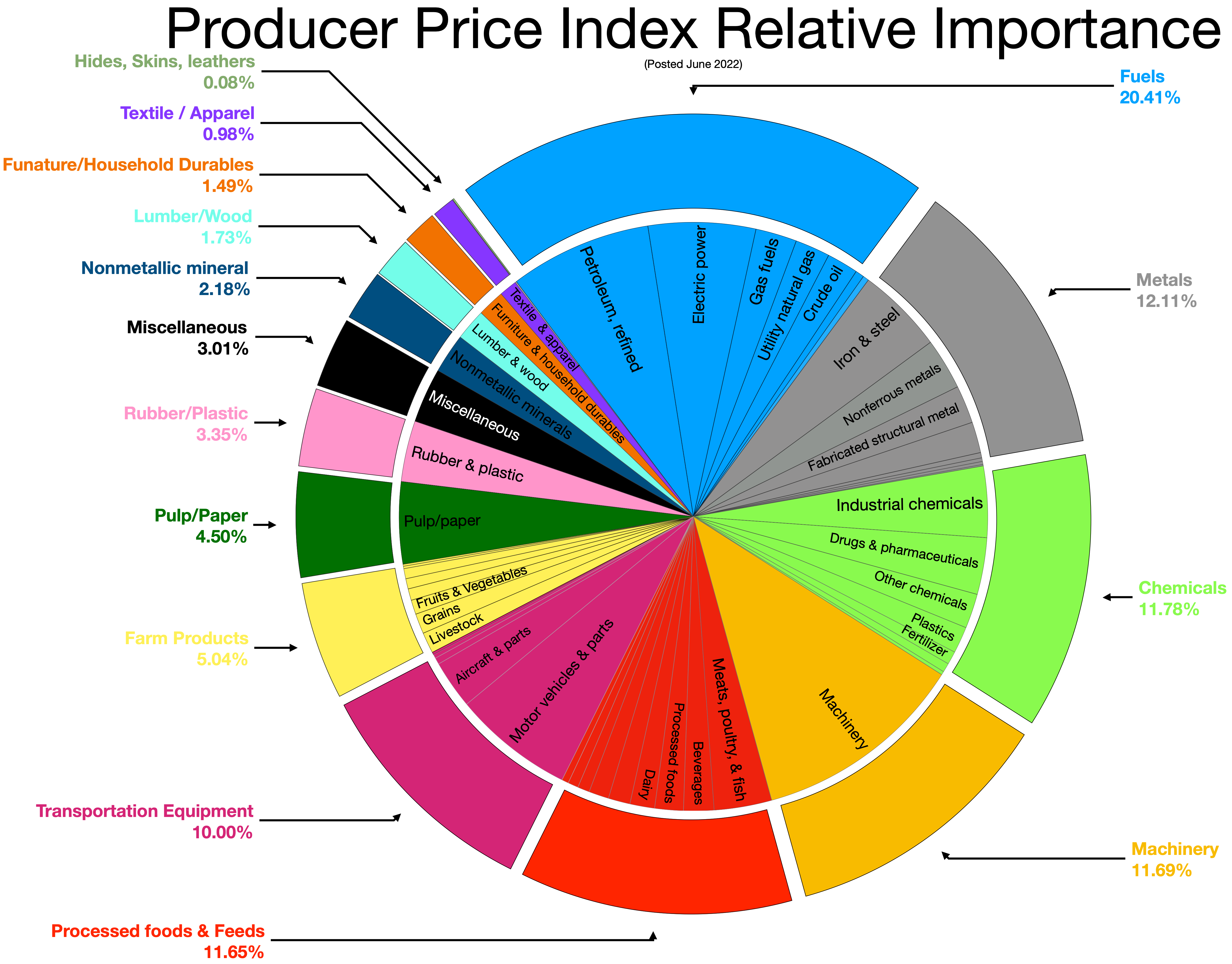
The PPI is a powerhouse of economic data. The index for intermediate goods, a crucial measure of input costs, also showed fluctuations, with specific sectors like energy experiencing volatility. For instance, the PPI for refined petroleum products can swing dramatically, impacting downstream industries. The 'PPI for All Finished Goods' serves as a key inflation gauge for the business sector, often influencing monetary policy decisions by the Federal Reserve.
👥 Key People & Organizations
The U.S. Bureau of Labor Statistics (BLS) is the primary custodian and publisher of the PPI, a government agency tasked with collecting and disseminating labor market and economic statistics. Within the BLS, specific divisions are dedicated to price surveys and index construction. Economists like Janet Yellen, in her capacity as former Chair of the Federal Reserve and current Secretary of the Treasury, have frequently cited PPI data in their analyses and policy recommendations, underscoring its importance for understanding inflationary trends. Major financial institutions and economic research firms, such as Moody's Analytics and S&P Global, also utilize and analyze PPI data extensively to forecast economic conditions and market movements.
🌍 Cultural Impact & Influence
The PPI's influence extends far beyond economic circles, shaping public discourse and business strategy. When PPI figures show a significant rise, headlines often trumpet 'rising costs for businesses,' which can translate into consumer anxiety about future price hikes. This has a direct impact on consumer confidence and spending habits. For businesses, the PPI is a critical benchmark for contract negotiations, price adjustments, and inventory management. It also informs the development of financial instruments, such as inflation-indexed bonds, and serves as a key input for macroeconomic models used by academics and policymakers at institutions like the International Monetary Fund (IMF). The perception of PPI trends can even influence political rhetoric during election cycles, as economic performance is a perennial voter concern.
⚡ Current State & Latest Developments
The PPI continues to be a closely watched indicator, reflecting the ongoing adjustments in global supply chains and commodity prices. While inflation has moderated from its peaks, the PPI still shows sensitivity to geopolitical events and shifts in energy markets. The BLS is continuously refining its data collection methods, incorporating new technologies and expanding its coverage to include emerging sectors. There's an ongoing effort to improve the timeliness and accuracy of PPI data, particularly in light of rapid technological changes and the increasing importance of services in the economy. Discussions are also underway regarding the potential for more granular data releases and enhanced analytical tools to better understand price dynamics at the industry level.
🤔 Controversies & Debates
A persistent debate surrounding the PPI centers on its representativeness and timeliness. Critics argue that the index may not fully capture the rapid pace of innovation and quality improvements in goods and services, potentially overstating inflation. The shift from a manufacturing-heavy economy to a service-dominated one also raises questions about whether the current PPI structure adequately reflects the true cost pressures faced by businesses. Furthermore, the methodology of price collection, while robust, can be subject to lags, meaning the index might not immediately reflect sudden market shocks. The debate intensifies when PPI figures diverge significantly from CPI trends, prompting questions about which index best reflects the overall inflationary environment and the degree to which businesses are absorbing or passing on costs.
🔮 Future Outlook & Predictions
The future of the PPI is likely to involve greater integration with real-time data sources and advanced analytical techniques. As the economy becomes more digitalized, the BLS may explore using web scraping and artificial intelligence to supplement traditional survey methods, potentially increasing the speed and scope of data collection. There's also a growing interest in developing more sophisticated measures of price change that account for quality improvements and the increasing role of digital goods and services. Some economists predict a move towards more frequent, perhaps weekly, releases of certain PPI components to provide policymakers and businesses with more agile insights into price pressures. The challenge will be to maintain statistical rigor while adapting to the evolving economic landscape.
💡 Practical Applications
The PPI has a wide array of practical applications across the economic spectrum. Businesses use it to adjust prices in long-term contracts, ensuring that their revenue keeps pace with their input costs. For example, construction companies might have contracts indexed to the PPI for construction materials. Financial analysts and investors rely on PPI data to forecast corporate earnings and assess the profitability of different sectors. Government agencies use it for economic forecasting, setting policy, and adjusting payments for various programs. Furthermore, the PPI serves as a crucial component in calculating real output for industries, allowing for a more accurate assessment of economic growth and productivity trends, particularly in sectors like manufacturing and wholesale trade.
Key Facts
- Category
- economics
- Type
- topic