
Contents
Overview
Seismology is the scientific discipline dedicated to the study of earthquakes, their causes, and the propagation of seismic waves through the Earth and other planetary bodies. This field extends to understanding other seismic sources like volcanic eruptions, tectonic plate movements, and even artificial explosions, as well as their environmental consequences, such as tsunamis. Seismologists utilize seismographs to record ground motion, generating seismograms that are then analyzed to map Earth's interior structure, assess seismic hazards, and monitor geological activity. Its origins trace back to early observations of earthquakes, but modern seismology has developed significantly with advancements in technology and theoretical frameworks, fundamentally shaping our understanding of plate tectonics and Earth's dynamic processes. Today, it is a critical component of disaster preparedness and geophysical research worldwide.
🎵 Origins & History
The formal study of earthquakes, seismology, emerged from a long history of human experience with seismic events. Ancient civilizations, from the Greeks to the Chinese, recorded earthquakes and proposed early explanations, often attributing them to mythological causes. However, it wasn't until the late 19th century that seismology began to coalesce as a distinct scientific field, driven by the development of the seismograph by pioneers like John Milne and Emilio Perret. The establishment of global seismological networks in the early 20th century allowed for the systematic collection of data that would eventually lead to the theory of plate tectonics.
⚙️ How It Works
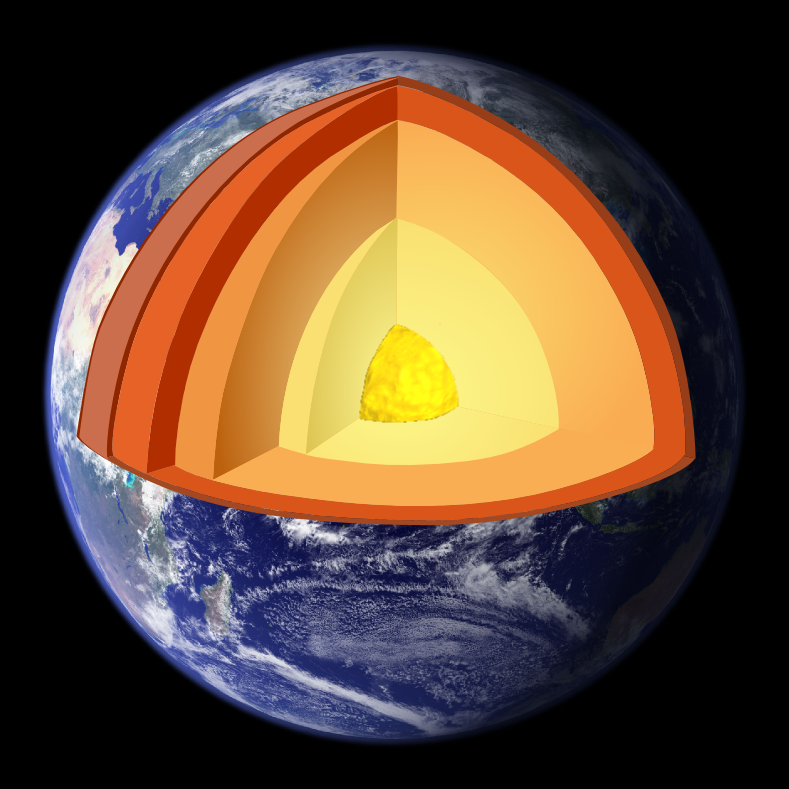
At its core, seismology relies on the principle that seismic waves, generated by sudden releases of energy in the Earth's crust, travel through the planet. These waves, broadly categorized into body waves (P-waves and S-waves) and surface waves, propagate at different speeds and exhibit distinct behaviors depending on the materials they encounter. Seismologists deploy networks of seismometers, sensitive instruments that detect and record ground motion. The resulting data, known as seismograms, are analyzed to determine earthquake locations, magnitudes, depths, and the characteristics of Earth's internal structure, from the crust to the core. Sophisticated computational models are used to interpret these wave patterns and reconstruct subsurface geological models.
📊 Key Facts & Numbers
The USGS (United States Geological Survey) maintains a network of over 1,500 seismometers worldwide, collecting data that informs hazard assessments for millions of people.
👥 Key People & Organizations
Key figures in seismology include Charles Francis Richter, co-developer of the Richter magnitude scale, and Inge Lehmann, who discovered the Earth's solid inner core through seismic wave analysis. Organizations like the United States Geological Survey (USGS), the Global Seismic Network (GSN), and the European Seismological Commission (ESC) are pivotal in data collection, research, and hazard assessment. Institutions such as the Caltech Seismological Laboratory and the Lamont-Doherty Earth Observatory at Columbia University are leading research centers, pushing the boundaries of our understanding of seismic phenomena and developing advanced monitoring techniques.
🌍 Cultural Impact & Influence
Seismology has profoundly influenced our understanding of Earth's dynamic nature, providing the empirical evidence for plate tectonics, the unifying theory of geology. The ability to map Earth's interior, from the crust to the core, has revolutionized geophysics and planetary science. Beyond academia, seismological data reportedly informs building codes and urban planning in earthquake-prone regions, directly impacting public safety and infrastructure development. The dramatic imagery of seismograms, often depicted in disaster movies and news reports, has also seeped into popular culture, shaping public perception of seismic risks and the science that studies them, even if often sensationalized.
⚡ Current State & Latest Developments
The current state of seismology is characterized by advancements in real-time seismic monitoring and the integration of machine learning for faster earthquake detection and characterization. Networks are becoming denser, with an increasing number of broadband seismometers and accelerometers deployed globally, including in previously under-monitored regions. Initiatives like the Earthquake Early Warning Systems (EEW) are becoming more sophisticated, providing precious seconds to minutes of warning before strong shaking arrives. Researchers are also exploring the use of non-traditional seismic sources, such as fiber optic cables and GPS data, to enhance seismic observation capabilities.
🤔 Controversies & Debates
One of the most persistent controversies in seismology revolves around earthquake prediction. While seismologists can forecast the probability of earthquakes in a given region over long timescales, reliably predicting the exact time, location, and magnitude of a specific earthquake remains elusive. This limitation fuels public skepticism and debate, particularly after major seismic events. Another area of contention involves the interpretation of seismic data related to induced seismicity, particularly the link between hydraulic fracturing (fracking) operations and increased earthquake activity in regions like Oklahoma, a topic actively studied by researchers at the University of Oklahoma.
🔮 Future Outlook & Predictions
The future of seismology points towards enhanced integration of artificial intelligence and machine learning for real-time analysis of vast seismic datasets, potentially improving earthquake early warning systems and enabling more accurate hazard assessments. Advancements in sensor technology, including miniaturized and distributed seismic sensors, will likely lead to denser monitoring networks. There's also growing interest in understanding slow slip events and their potential role in triggering larger earthquakes, a frontier being explored by researchers at the University of Tokyo. Furthermore, the application of seismological techniques to study other planets, such as Mars and the Moon, is expanding our understanding of planetary dynamics beyond Earth.
💡 Practical Applications
Seismology has critical practical applications across several domains. Its primary use is in seismic hazard assessment and mitigation, informing building codes and disaster preparedness plans for communities worldwide, particularly in regions like Japan and California. It's also indispensable for the oil and gas industry, where seismic surveys are used to map subsurface geological structures for hydrocarbon exploration and to monitor the integrity of underground storage facilities. Furthermore, seismological techniques are employed in nuclear test ban verification, helping to distinguish between natural earthquakes and clandestine underground explosions, a crucial role for organizations like the Comprehensive Nuclear-Test-Ban Treaty Organization.
Key Facts
- Category
- science
- Type
- topic